Guinea pigs are social, affectionate, and rewarding pets. However, they require daily care, a spacious habitat, a specific diet (including unlimited hay), regular handling, consistent cleaning and much more. They thrive on interaction and can live 5–8 years, making them a long-term commitment. Their gentle nature and shy, playful personalities make them wonderful companions, but they need dedicated time and effort to stay healthy and happy.
I've owned guinea pigs my whole life, as of 2026, I've owned approximately 40+ guinea pigs, and I'll dedicate my life to advocating for them.
Enclosures
No more hutches!
Hutches have been used to house guinea pigs for centuries, but they are far from being considered a good living space. Thanks to stereotypes and pet shops pushing bad care for convenience, small cages have unfortunately become a care standard for many small pets.
This is one of my first hutches…
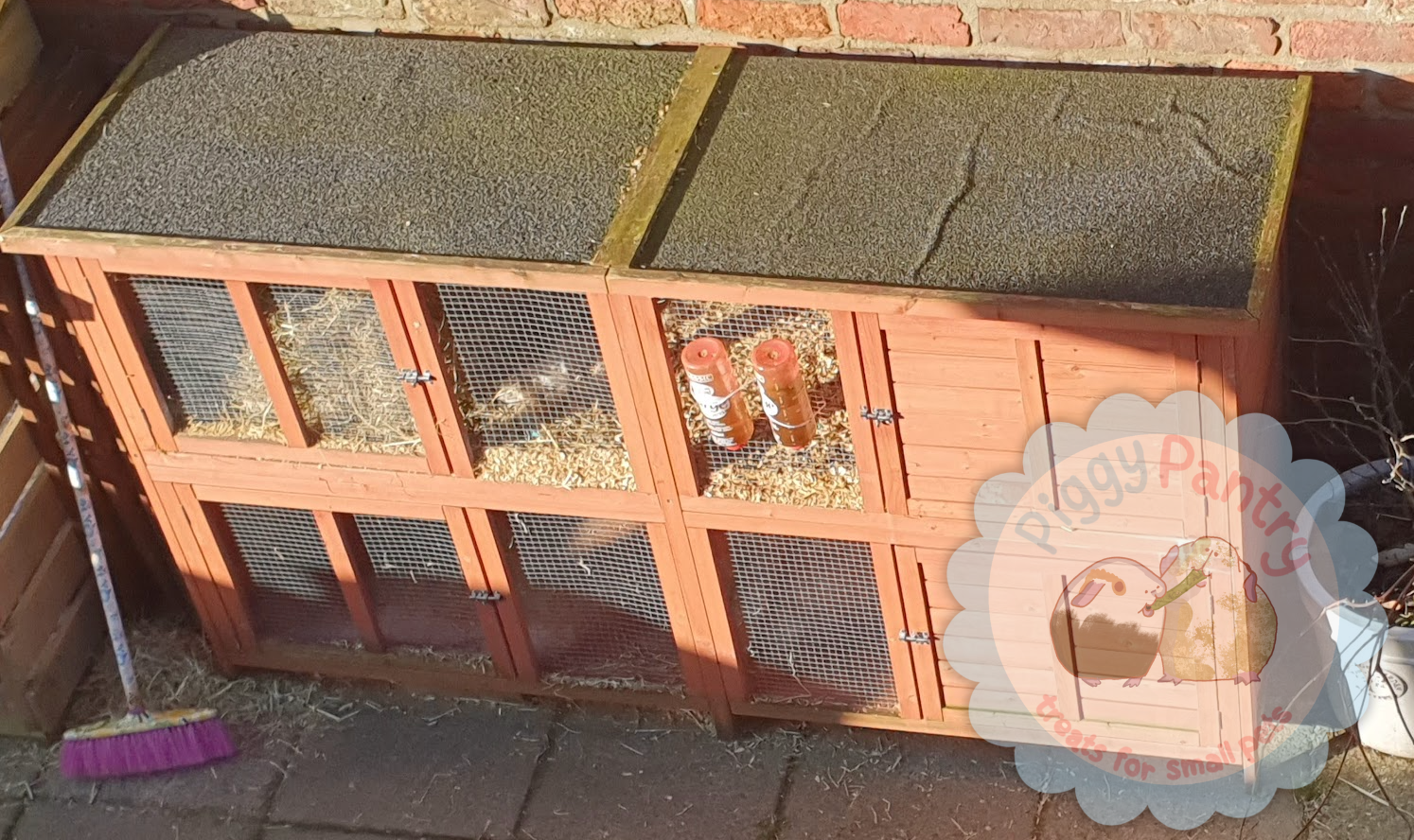
Awful, right? This probably would have cost £80–£100, and as you can see, the weather has affected the roof. We would be buying and replacing hutches at least once every 2–3 years, which is insane to think, if I had just made a proper cage for a fraction of the price and kept it indoors, this would have never been an issue.
I would struggle with the wood rotting after about a year, and even mouldy wood where the wind would blow the rain inside and make the doors rot and mould. The hinges and chicken wire for the windows would rust and fall off. The doors would drop, making them hard to open and close. This would also mean the tops of the doors had gaps in them that would let in a cold breeze and rain.
Now guess how much this one cost… £800. And it only lasted 3 years before it rotted away.
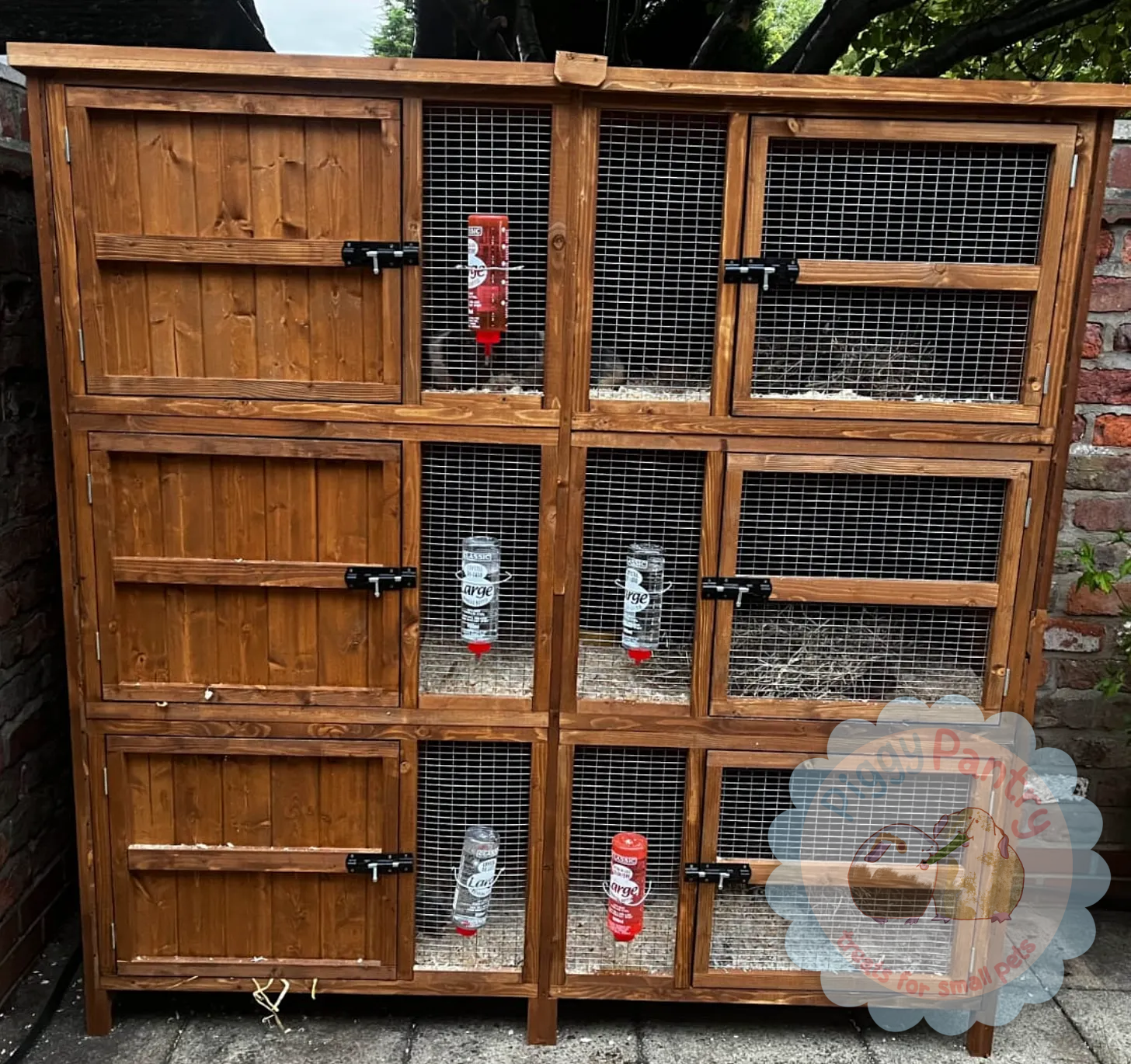
Hutches like this don't provide enough ventilation. Traditional hutches like these are solid-sided with little airflow (hence mould and dampness), and because of the limited airflow, they can cause respiratory infections due to trapped ammonia from urine building up, not just in the bedding but also seeping into the wood. Because they aren't exactly wipeable, cleaning them is extremely difficult, meaning there's a higher chance of bacterial buildup, fly infestations, and unsanitary conditions that can lead to illnesses such as respiratory infections and bumblefoot.
Hutches also offer little protection from the elements, which was one big factor in my switch from hutches to more suitable enclosures. They offer little insulation against cold drafts in winter or heatwaves in summer. Guinea pigs are sensitive to temperature changes and can suffer from hypothermia or heatstroke in poorly designed hutches. We all know how intense winter is in the UK, along with spontaneous heatwaves, so it's best to take precautions against this. Housing guinea pigs indoors vs. outdoors is a huge debate, and indoors always wins.
Hutches are also often cramped, restricting a guinea pig's natural movement. Guinea pigs need at least 7.5–10.5 sq ft of space (per guinea pig) to run, stretch, and explore. A hutch restricts this, leading to obesity, muscle atrophy, and boredom. The lack of space also restricts enrichment opportunities, hutches lack space for hideouts, tunnels, and foraging toys, which are essential for a guinea pig's mental stimulation and happiness. This can lead to stereotypic behaviours (e.g. bar-chewing, over-grooming, or pacing).
Guinea pigs are herd animals and need space to interact with cage-mates. Hutches often don't accommodate multiple pigs, isolating them and causing loneliness, depression, or aggression.
Another big reason I made the change is that it's difficult to monitor their health when they are in a hutch and/or outside. Modern pet care recognises that indoor, enriching environments are essential for their well-being. Using a hutch is like keeping a dog in a kennel 24/7, it's cruel and unnecessary.
The plastic cage dilemma
So, have I de-influenced you from hutches yet? What about those indoor plastic cages? They have plenty of ventilation and a plastic base that can hold all their bedding and be wiped clean. Oh, and some have "lovely," "convenient" wire bottom floors with a tray to pull out so the waste doesn't sit in the cage and get your piggies dirty.
Those are my late guinea pigs Ted (ginger) and Leo (tri-colour) in said plastic cage. And while this is probably one of the better plastic cages, many still are outdated and wrong (but not all!).
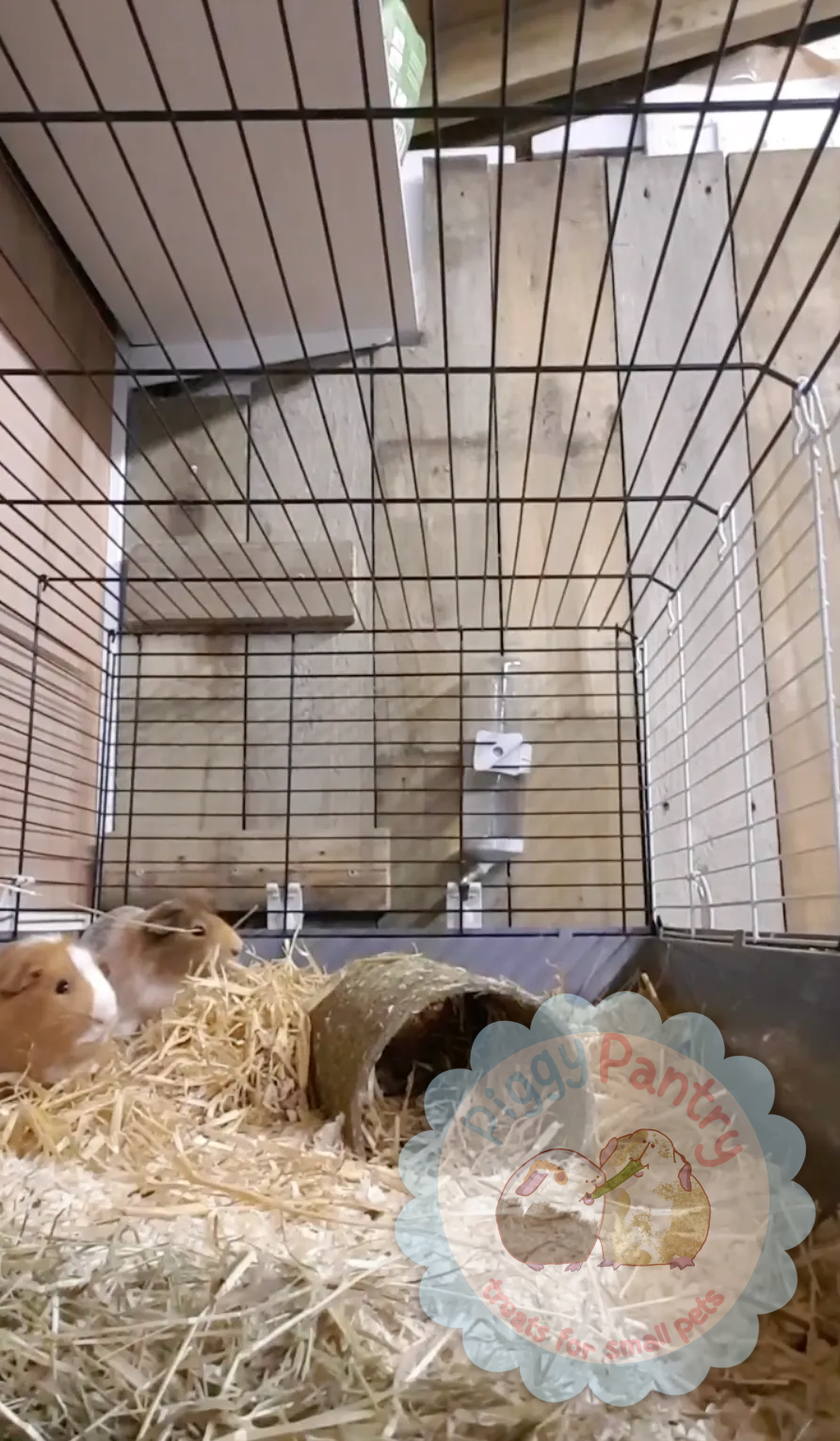
Most plastic cages (e.g. Midwest habitats) measure ~24" x 50" for two guinea pigs, which is below the recommended minimum of 10.5 sq ft. This restricts movement, leading to obesity, muscle loss, and joint problems over time, and this is the case for many store-bought cages, just way too small. So while they seem the better choice, out of the elements, better ventilation, and easy to clean, they still don't usually meet the size requirements for your piggies.
This is why many pig owners (like myself) use them as temporary or isolation cages for new herdmates. This was Maggie and Flo's cage when I first brought them home.
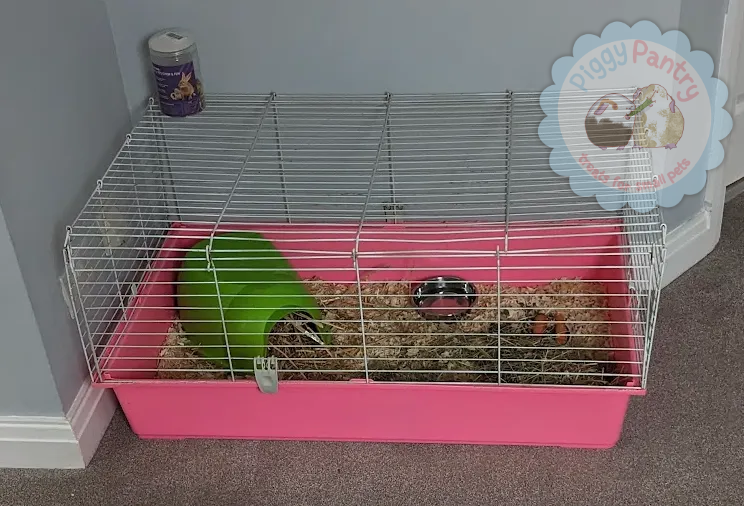
They needed to be away from any other pigs just in case they spread any potential illnesses to the others. Now, I would never house a pig here long term, as you can see, this cage is probably the equivalent of a 1x2ft C&C cage, which is way too small for even one pig.
There are some size-appropriate plastic cages out there, such as the Ferplast Large Rabbit Cage Krolik 200. While rabbits should not be housed in this cage, it's actually almost an amicable living space for two lovely little piggies! This cage is 2.05m (L) x 0.6m (W) x 0.5m (H), meaning it's too narrow, but many people buy two and sit them side by side with the doors or sides fully open, secured with zip ties.
💡 Top Tip, Repurpose, don't waste
If you already have one of these cages and don't know what to do with it once your piggies have moved out, you can repurpose it as a hay box! My guinea pigs love their hay boxes. This can also be done with regular underbed storage boxes, or even a cheap, low cat litter tray, a free or cheap way to further enrich your piggies' lives.
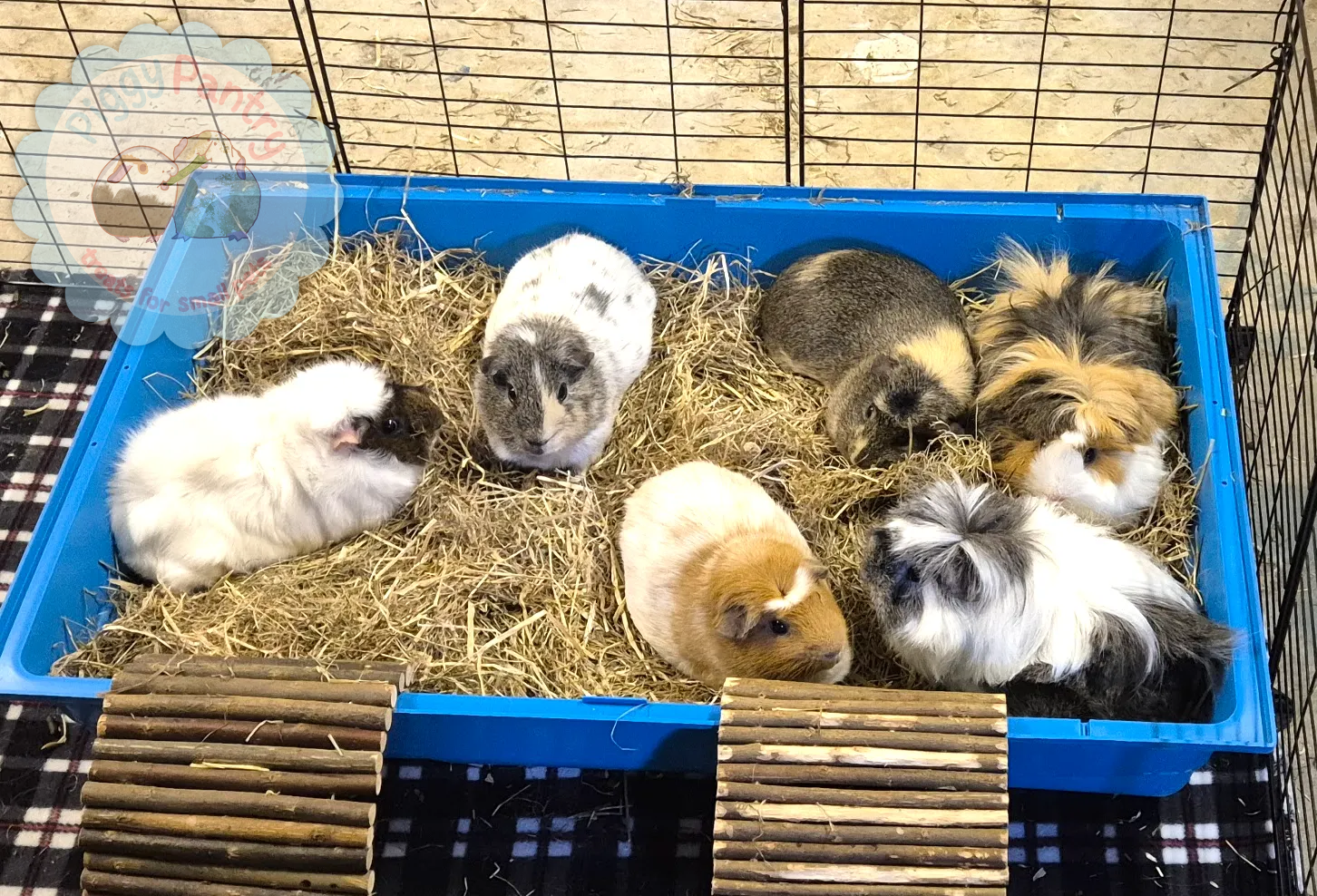
Due to the nature of these plastic cages, they are often too small for the necessities. The lack of privacy can really negatively affect your guinea pigs, feeling exposed, they may lack trust in their environment and in you, due to their natural prey animal instinct. While plastic cages are easy to assemble and clean at first, their design flaws (size, durability) create long-term health and behavioural issues for guinea pigs. They're a false economy, cheaper upfront, but costly in terms of a guinea pig's quality of life. And like many store-bought cages, they are far too small. So, what can you do about it?
C&C cages
C&C cages will always be my #1 choice. They are personalisable, sleek, and can be an amazing size for your piggies. Like previously mentioned, they need at least 10.5 sq ft per pig. With C&C cages, you can personalise the cage to look like, and be, whatever size you want!
Back in the day, before they were officially a thing you could buy, people would just use C&C grids (usually used as storage racks) and cut coroplast to fit as a base. This is the cheaper alternative, but still foolproof! Nowadays, you can just search "C&C cage" and you'll have plenty to choose from. You've still got to be careful, though, not all C&C cages are created equal. Some sellers might offer designs that are still too small for guinea pigs.
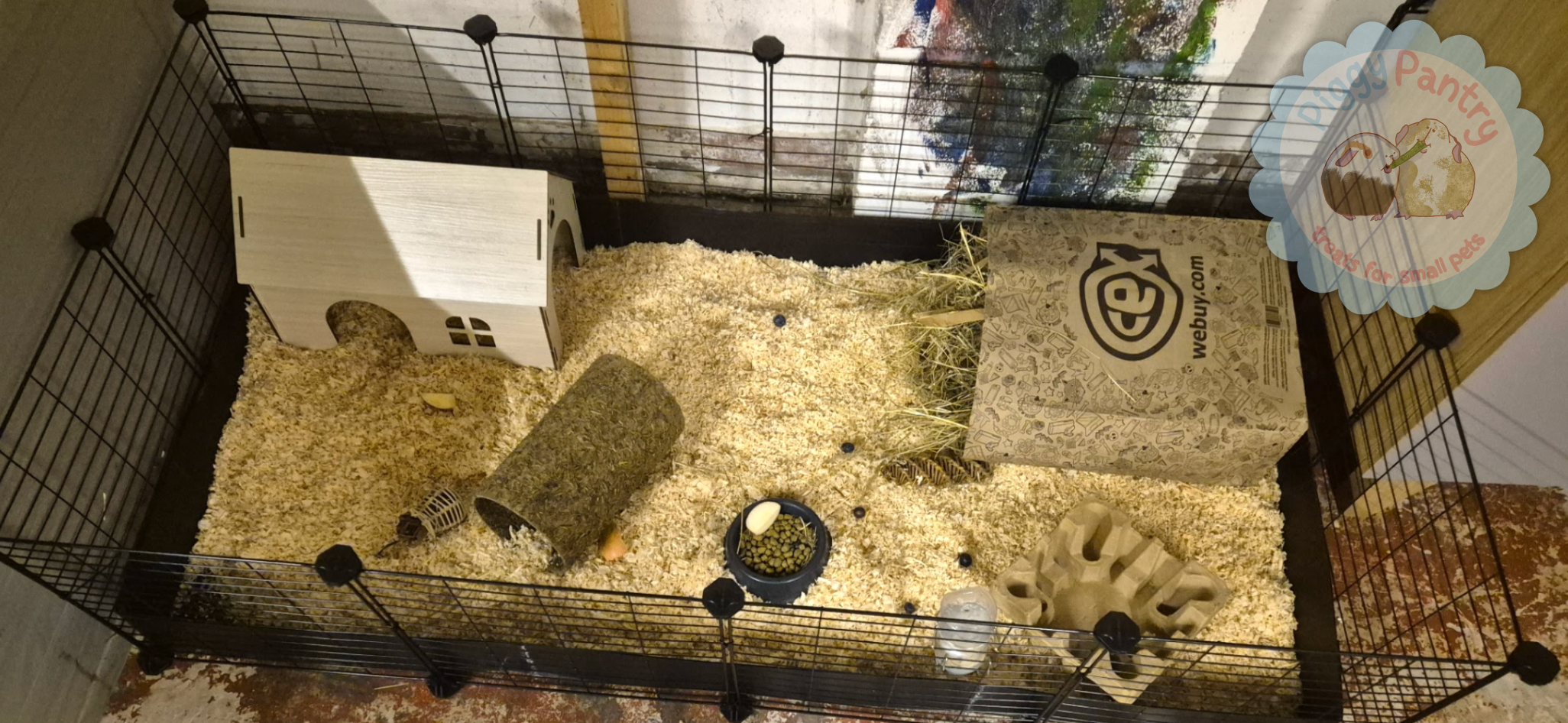
For two piggies, 2x4ft is the absolute minimum. For males (who need more space), 2x6ft is recommended to ensure they have room to roam and explore.
C&C cages provide an amazing amount of space and ventilation. Now you're probably thinking: "If a plastic cage has good ventilation, what's the difference? Isn't it just as exposed?" Well, the upside to the space C&C cages provide doesn't just mean your guinea pigs can run further, it means you can provide them with hidey houses, tunnels, and different corners to hide in. This gives them coverage and a place to hide when they hear something sudden and feel unsafe. Providing this also gives them trust in their environment and will gradually help their confidence.
An easy way to better improve their feeling of safety is to elevate the cage onto a table (or build a stand). Having the cage at waist height stops the feeling that predators are coming to get them whenever you hang over it or reach in. I've always found this massively improves their cage confidence around me!
If you're serious about giving your guinea pigs the best life possible, a C&C cage is the way to go. It's spacious, customisable, and designed with their needs in mind, unlike hutches or plastic cages, which fall short in every way. Although, there is one more way to give your pigs an amazing life in their enclosure…
Sheds, a double-edged sword
Sheds might seem like a great middle-ground option; they're spacious, sheltered, and customisable. However, they come with major risks if not set up correctly. Unlike hutches or plastic cages, sheds can work well if you maintain them properly, but they can also become a nightmare if ignored.
One of the biggest advantages of a shed is space. A well-sized shed (e.g. 6x4ft or larger) can provide more room than most hutches or plastic cages, allowing your guinea pigs to run and express natural behaviours. You can also customise the interior with lots of different upcycled enrichment items, plus, I always love the look of sheds for guinea pigs because of their natural feel.
If you're building or converting a shed, you have full control over the design, which is something you'll never get with a store-bought hutch or plastic cage. Cute, dainty Wendy houses can be turned into piggie cottages with the right modifications. Or even your average shed can be a great way to utilise space for your pigs!
The biggest downside is that you can't just buy a shed, equip it with bedding, toys, food and water dishes, and put your pigs in. The shed needs to be insulated, ventilated and maintained for both summer and winter.
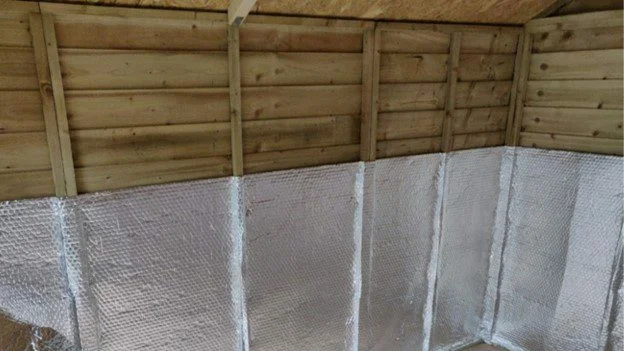 EcoHome Insulation
Guinea pigs are highly sensitive to heat. A shed with poor ventilation or direct sunlight can turn into a death trap during summer. Even in the UK, temperatures can soar above 25°C (77°F), and guinea pigs cannot sweat or pant effectively to cool down. Heatstroke is a serious and potentially deadly illness that needs to be avoided when picking a shed as their habitat.
The best way to prevent this is to use reflective insulation (to block heat while also retaining warmth when the cold weather hits), insulating the walls and roof. Some people just staple it on, but most will cover it with plywood for a sleeker look and to prevent curious piggies from chewing.
Adding ventilation is also a vital step. Air vents are fine but could cause dampness eventually, which is why most people opt for mesh windows (covered with perspex in winter), usually made from strong chicken wire, providing ventilation along with a cute window to see your piggies! Avoid placing the shed in a spot where direct sunlight hits for long periods of time, as a shed can become extremely hot in summer without proper precautions.
Using lino flooring can help not just with keeping it clean and protecting the raw wood from urine, but also gives your guinea pigs a nice cool place to lie down when it's hot. You can use bedding in winter and tile with bath mats in hot spots (like under hidey houses) in summer. Fleece bedding is also a great idea for a shed, so you aren't spending too much on loose bedding and creating waste.
Sheds are notoriously damp, especially in the UK's rainy climate. Moisture from the ground, rain seeping in, or even condensation can create a perfect breeding ground for mould and bacteria. To prevent this, ensure the shed is elevated off the ground, use waterproof flooring (like lino or tile), and make sure the shed is well ventilated.
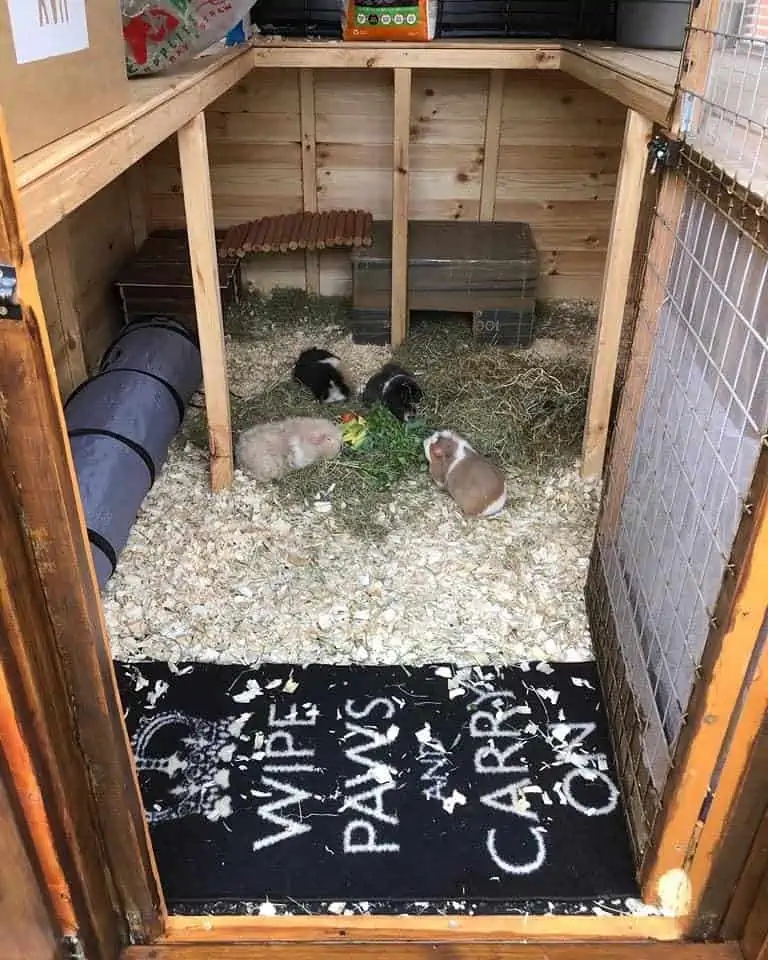 Image: Guinea Pig Alliance
💡 Top Tip, Sheds vs. C&C cages
A well-insulated, guinea-pig-proofed shed can be a fantastic home for your pigs. But if you're not willing to invest the time and money to make it safe, a C&C cage indoors is always the better choice. It's okay to choose the more affordable option, while sheds can look more attractive, indoor C&C cages can be more cost-effective and convenient.
Conclusion
Guinea pigs are lifelong companions with big personalities and big needs! They deserve more than a hutch or a plastic cage. They deserve a safe, spacious, and enriching home where they can thrive, not just survive.