Dental health is one of the most overlooked yet critical aspects of guinea pig care. Unlike humans, guinea pigs have continuously growing teeth, which means they rely on a diet rich in fibre and proper chewing to wear down their teeth naturally. Dental issues in guinea pigs can escalate quickly, leading to malnutrition, weight loss, and a severely reduced quality of life. Yet, many pet owners remain unaware of the early signs or how to prevent these problems.
Dental Anatomy
Guinea pigs possess 20 continuously growing teeth that are open-rooted (aradicular hypsodont). There are four incisors (two on top, two on the bottom). They have no true enamel on the rear and are primarily used to grab, nip, and shear food. These front teeth grow rapidly at a rate of 1 to 2mm per week (haha 'wheek').
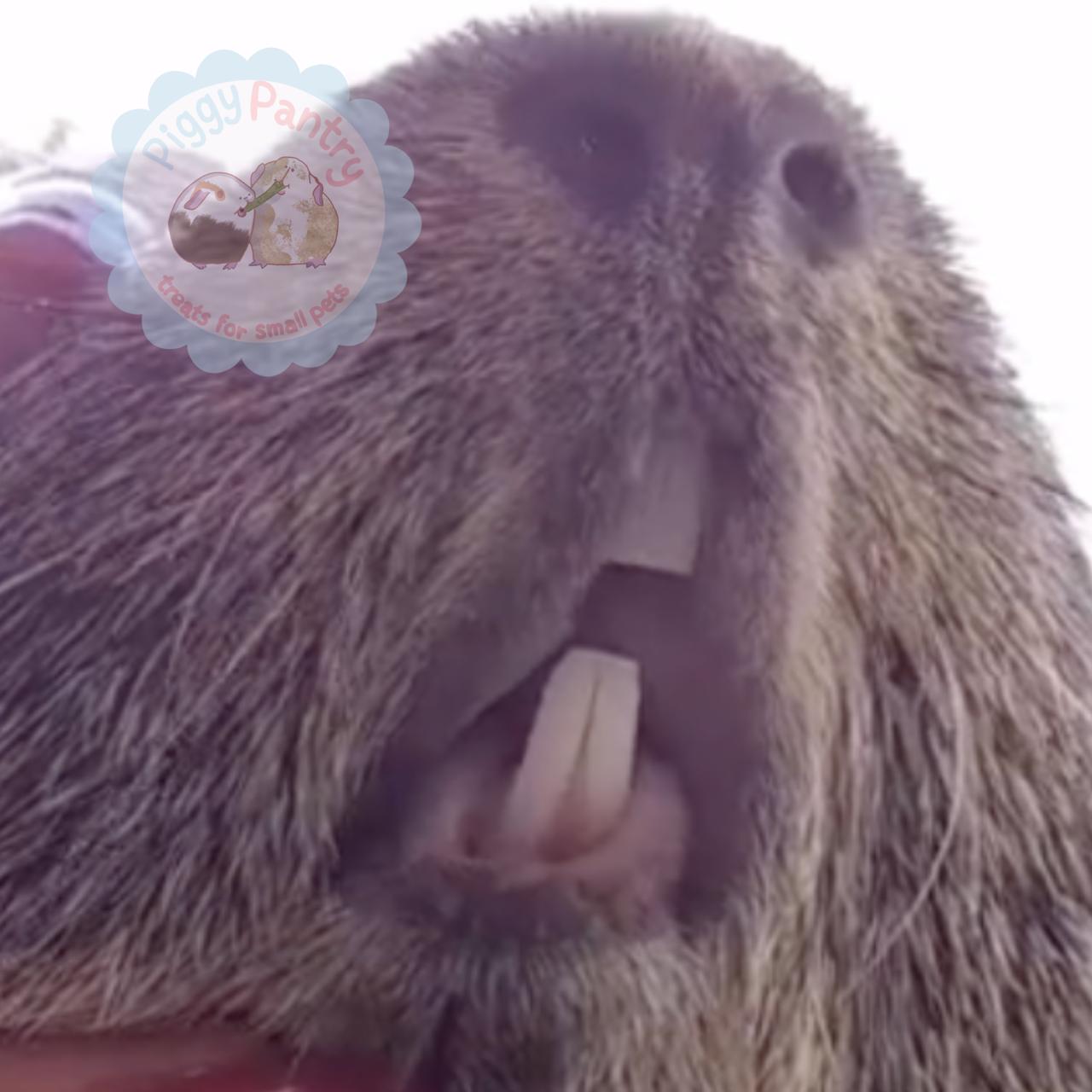
There are 16 cheek teeth (8 top, 8 bottom) used to grind tough, fibrous plant material. They sit at an acute angle and allow the guinea pig to move its jaw in a figure-eight, side-to-side motion. These teeth grow continuously at a slightly slower rate than the incisors. Unlike human teeth, guinea pig teeth do not develop a closed root structure. The tooth's base features an open apex that continuously produces new dental tissue, allowing the tooth to erupt as fast as it wears down. And finally, guinea pig teeth should be white, not yellow. You may know it's the opposite for some rodents, but guinea pig teeth are at their healthiest when they are white and straight!
Dental health can have a huge impact on your guinea pig's life. It can lead on to other health issues such as GI stasis if your guinea pig is in so much pain that they decide they can't eat.
Malocclusion
Because guinea pigs have open-rooted, continuously growing teeth (aradicular hypsodont), any lack of natural wear leads to rapid overgrowth, causing severe pain, starvation, and tissue damage. When a guinea pig's teeth do not align when they grow, they can collide (sort of like a tooth traffic jam!). Incisor overgrowth is the most common you will see/hear about. This is when front teeth grow too long and begin curling backward into the mouth or piercing the lips. Not only is this excruciatingly painful, it can create other issues once the teeth pierce the mouth, such as infection or abscesses. It will also discourage them from eating, which, like previously mentioned, can lead them into GI stasis.
The upper cheek teeth typically grow outward, cutting into the cheeks. The lower cheek teeth grow inward, forming a painful "bridge" over the tongue that traps it and prevents swallowing. Once a tooth becomes slightly misaligned, the guinea pig alters its chewing motion to avoid pain. This abnormal chewing accelerates uneven wear on the other teeth, causing total dental collapse.
Why does this happen?
The most common cause of malocclusion is dietary deficiencies. A diet lacking long-strand, fibrous hay prevents the necessary horizontal, figure-eight grinding motion. Additionally, a lack of Vitamin C weakens the periodontal ligaments holding the teeth, causing them to shift out of alignment under normal chewing pressure.
Although, some guinea pigs are just born with jaw deformities, such as an elongated upper or lower jaw (prognathism). This is especially common in poorly bred or younger guinea pigs. Another cause is dropping a guinea pig, pulling its teeth on cage bars, or injuries from fights, which can fracture a tooth or damage the underlying growth bud, causing the tooth to grow back at an abnormal angle.
Signs and Symptoms
Slobbers: Wet, matted fur around the chin and neck caused by an inability to swallow saliva.
Weight Loss: Dropping weight rapidly while still showing a strong interest in food.
Chewing Difficulties: Picking up food and dropping it, chewing on one side of the mouth, or eating much slower than usual. Weighing guinea pigs weekly (wheekly) is so important and is a crucial part of their care. It can really help owners identify illnesses or signs of illness quickly, and get a head start on treatment.
Selective Eating: Refusing hard pellets or tough hay, preferring only soft foods or vegetables. When I needed to identify if one of my piggies had a dental issue, I offered her a bowl of hard pellets, then soft pellets soaked in water. The idea was that if she primarily went for the soft ones every time there could have been a dental issue. This isn't a solid way to see if they do in fact have dental issues, but it's something you can do at home while waiting for a vet appointment. It also helps them consume food if they aren't eating normally.
Facial Swelling and Discharge: Lumps along the lower jaw line (indicating tooth root abscesses) or discharge from the eyes and nose due to overgrown upper roots pressing on the tear ducts.
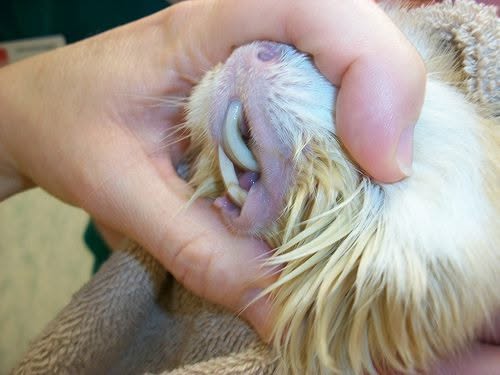
Image credit: The Guinea Pig Guru via Facebook
What happens at their vet appointment?
Malocclusion cannot be cured at home and requires immediate intervention from an exotic animal veterinarian. (I am not a vet. This is purely written from research and personal experience. Please seek a veterinarian's advice too.)
The vet will use a speculum to examine the back cheek teeth or perform skull X-rays or a CT scan to evaluate the tooth roots beneath the gum line. If they need trimming or filling, under safe anaesthesia, the vet uses a specialised high-speed dental burr to grind the overgrown teeth back down to a normal length and angle. Clipping teeth with nail clippers is highly dangerous as it can shatter the tooth down to the root. If root abscesses are present, the vet may need to surgically drain them and prescribe long-term antibiotics. Because the tooth roots may be permanently damaged or misaligned, many affected guinea pigs require professional dental trimmings every 4 to 8 weeks for the rest of their lives.